E-Cigarette Sourcing Compliance: What Documents to Request
There is no such thing as a compliant e-cigarette. There is a device that is compliant for one market, one nicotine strength and one packaging format, and the same carton is a seizure in the next country. Buyers who ask "is it compliant?" get a yes and a shipment that stops at customs; buyers who ask "compliant for where, at what strength, in what packaging" get a document pack they can check.
Compliance here is a paper exercise before it is an engineering one, and the paper is market-specific. This guide covers what to request in the first email, which market each document belongs to, and the two distinctions that catch most first-time importers.
Start with the destination, not the product
In the European Union, an e-cigarette is regulated under the Tobacco Products Directive, Article 20. The manufacturer or importer notifies the product to the competent authority of each member state six months before it goes on sale, with the ingredient list, emissions data and toxicological information. The directive also caps nicotine at 20 mg/mL, limits tanks to 2 mL and refill containers to 10 mL, and requires child-resistant, tamper-evident packaging carrying a health warning.
In the United States, a product that was not on the market before the deeming rule took effect needs a premarket tobacco product application, and selling without an authorisation is unlawful regardless of what the factory's paperwork says. In the United Kingdom the route is a notification to the medicines regulator under retained rules, and the treatment of single-use devices has tightened in recent years — confirm the current position before quoting disposables rather than relying on a supplier's summary from last season.
So the first question to a factory is not "do you have certificates" but "which markets is this exact model cleared for, and what is the reference number". A factory selling into several regions will answer with a list. One selling into none will answer with adjectives.
FDA registration is not FDA authorisation
This is the distinction that costs the most money. Establishment registration and product listing put a facility and a product on a database; they are filings, not approvals, and they do not make a product legal to sell. A marketing authorisation is a separate decision with a separate number, granted after a substantive review.
When a supplier says "FDA registered", ask for the authorisation letter and read the product name on it. If the answer is a registration number, the product is on a list and nothing more. The same discipline applies in Europe: a notification number is proof that a file was submitted, not proof that a member state accepted the claims in it.
The liquid has its own paper trail
Devices travel on hardware documents; liquid travels on chemistry documents, and buyers routinely treat them as one file. Ask for the e-liquid safety data sheet in the sixteen-section format, a certificate of analysis for the batch with nicotine strength measured rather than declared, the propylene glycol to vegetable glycerin ratio, and the flavour ingredient list with any component that carries its own restriction.
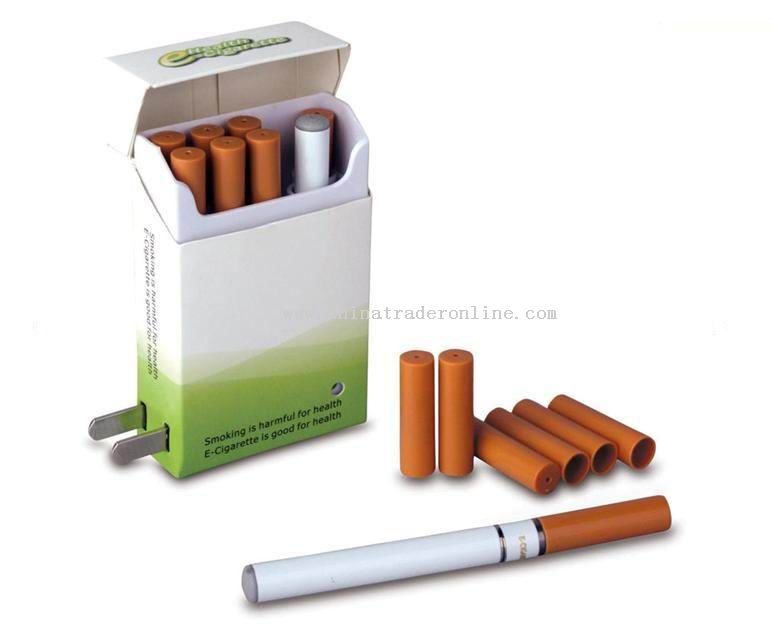
Child resistance is its own test, not a design opinion. The reference method for reclosable packaging is ISO 8317, and a report should state the panel size and the pass criteria, because a cap that an adult cannot open is a different failure from one a child can. Tamper evidence is separate again: a shrink band on the outer carton does not satisfy a requirement written for the container the liquid sits in.
Nicotine strength is where declared and measured diverge most often. A 20 mg/mL claim sits exactly at the European ceiling, which means any measurement error puts the batch outside the law. Ask for the analytical method and the tolerance, and treat a certificate that reports a single number with no method as a marketing document.
Transport documents for a device with a cell and a liquid
Two hazard classes travel together. The lithium cell needs the UN38.3 test summary and the battery MSDS, and a device shipped with the cell installed is declared as UN3481 rather than UN3480. The liquid, if it contains nicotine, is a toxic substance in Class 6.1 and carries its own UN number on the dangerous goods declaration. A shipment that needs both declarations is not unusual; a forwarder who proposes to treat it as one is a forwarder to replace.
Ask for the state-of-charge procedure as well if the cells ship inside the devices, because the air rules that apply to standalone batteries are stricter than most factories assume, and a carton charged to full at packing is a carton that gets refused at the counter.
What to request in the first email
Seven items, in one message, before any price discussion: the market authorisation or notification number with the product name it covers; the e-liquid safety data sheet; the batch certificate of analysis with the nicotine method; the child-resistance report; the UN38.3 summary; the dangerous goods declaration the factory uses for this configuration; and the packaging artwork showing the warning and the age restriction.
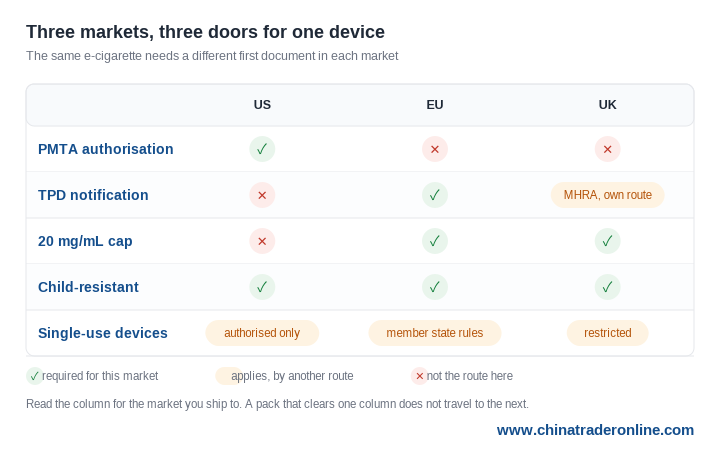
Two habits make the pack usable. Keep the reference numbers in the purchase order, not only in an email thread, so a repeat order in eighteen months can be checked against the same numbers. And re-ask when the model changes: a new coil, a new pod size or a new liquid supplier is a new file in most markets, and the old number does not cover it. Suppliers who understand this will tell you which changes trigger a resubmission; suppliers who do not will tell you it is the same product.
Sourcing products from China?
Send your product list and target quantity for a quote and a digital proof.
Get a free quoteRelated products
E-CigaretteCTO28968
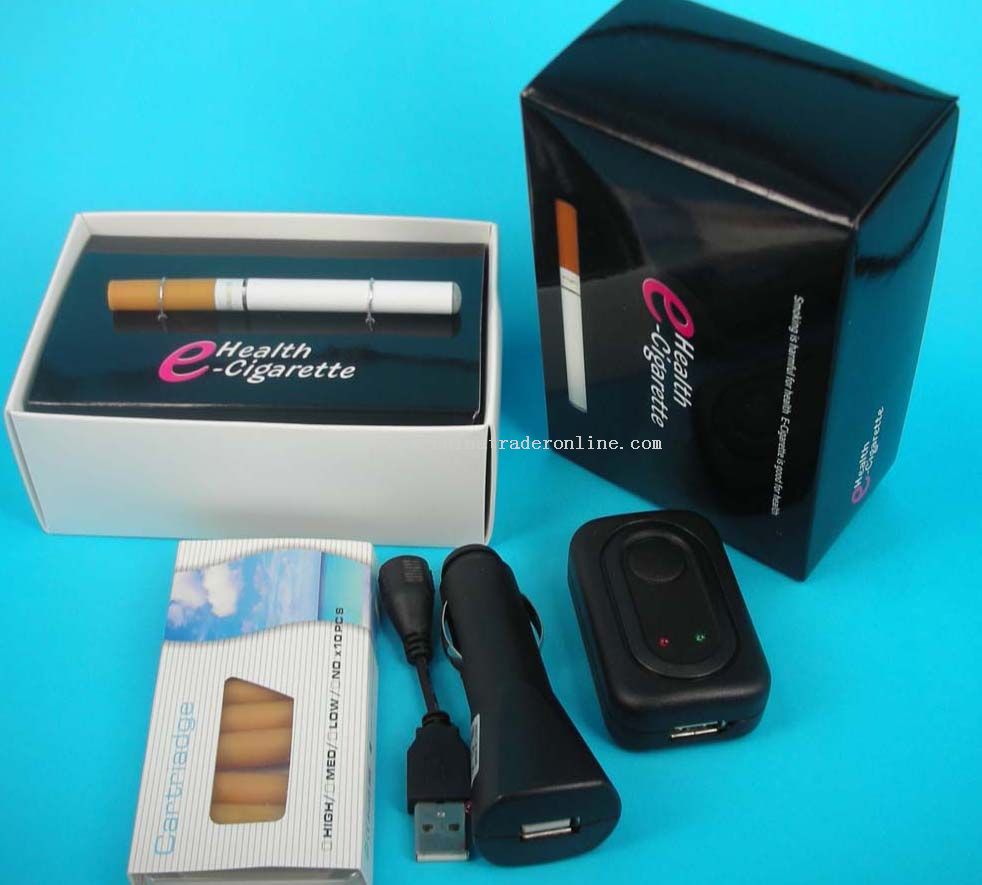 E-cigCTO30230
 Electronic Cigarette with -20 to 60°C Working Temperature and Cigarette Charge BoxCTO31782
 E-cigarette Cartridges, Can Match Various Types of Electronic Cigarettes CartridgesCTO47043
 Green E-cigarette in E-pipe Style, No Fire Hazard and Safe for Second Hand SmokingCTO47104