Flashing Pin Plating Wear: 5 Finishes Ranked by Durability
Plating wear on a flashing pin does not start on the flat face, which is why buyers who judge a sample by its front photo are surprised by returns. Wear starts where the metal is handled and where the surface is not flat: the rim of the pin, the edge of the die-struck logo, and the back where the clutch sits. Ranking five finishes by durability therefore means ranking them on those edges, not on the display surface, and it can be done on a sample with three tests that take minutes.
Wear Shows on Edges and Lettering, Not on the Flat Face
Plating is a thin deposited layer, and its thickness is never perfectly uniform. Electroplating builds faster on high-current-density areas, which on a die-struck pin are the outer rim and the raised tops of the lettering. Those same areas are the ones that get touched, wiped and rubbed against a lanyard. The result is a familiar pattern: a pin that looks new in the middle and pale or brassy along one edge.
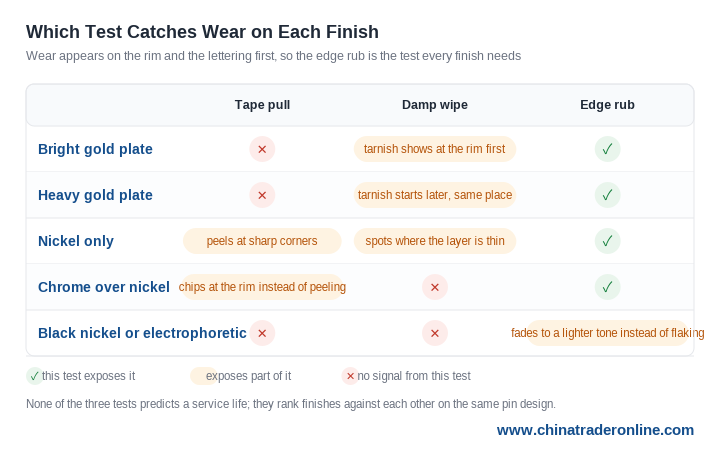
That pattern is the reason a wear test has to include an edge rub. A tape pull and a damp wipe both test adhesion and corrosion on flat surfaces, and both can pass while the rim is already going. The three tests together are what produce a ranking; any one of them alone produces a false reassurance.
What Each of the Five Finishes Actually Is
Bright gold plate is a thin gold layer over a nickel underplate, and it is the cheapest way to get a gold tone. Its wear signature is a colour change at the rim from gold to a paler tone as the gold thins, followed by a grey cast where the nickel shows. It does not flake, which is why the failure is often described as fading rather than peeling.
Heavy gold plate is the same stack with a thicker gold layer. It does not resist wear in a different way, it simply takes longer to reach the same point, so the failure appears in the same place and the ranking between the two is a matter of how long the buyer needs the pin to look right.
Nickel alone, with no gold on top, is bright and hard, and it wears well on flat areas but peels at sharp corners where the deposit is stressed. Chrome over nickel is harder still and chips rather than peels: the failure is a small bright flake at the rim with a sharp edge, which reads as damage rather than wear. Black nickel and electrophoretic black are the two dark finishes that fade to a lighter tone instead of flaking, and they are the ones where a buyer most often mistakes wear for a colour that was never matched.
Three Bench Tests That Rank Them
Tape pull tests adhesion. Press a strip of clear adhesive tape across a plated edge, rub it down, and pull it off in one motion. Loose plating comes away as flakes or as a grey smear on the tape. This test catches nickel that was deposited over a contaminated surface, which is the defect that appears on the first humid week rather than after use.
Damp wipe tests corrosion resistance. Wipe the pin with a damp cloth, leave it in a closed bag overnight, and look for spotting. Fingerprints left on the surface before packing are what start the spots, so a pin that spots here has a handling problem as much as a plating problem.
Edge rub tests wear. Rub the rim of the pin against a piece of the lanyard cord or the card it will be packed with, twenty strokes by hand, then look at the rim under a light. This is the test that separates the five finishes, because it attacks exactly the area where service wear appears.
Why the Ranking Changes With the Pin Design
The same finish can rank differently on two pins. A die-struck pin with sharp, deep lettering has more high-current-density edges than a die-cast pin with soft relief, so its plating is thinner exactly where the wear test looks. A pin with a recessed enamel or epoxy fill protects the flat area and leaves the rim as the only exposed plating, which concentrates all handling wear on that one line.
Size matters too. A large pin has more rim length per unit of face area, so it shows edge wear sooner than a small one, even with identical plating. If the buyer is comparing two suppliers who quote the same finish name, the comparison is only meaningful on the same tool, which is why samples should be approved against the production tool rather than against a generic plated disc.
What to Put on the Order
Name the finish stack rather than the colour: gold over nickel, nickel only, chrome over nickel, or black nickel. Add a plating thickness figure, and add the three tests as acceptance criteria on the sample, with the edge rub done on the rim in the same place each time so the results are comparable across revisions.
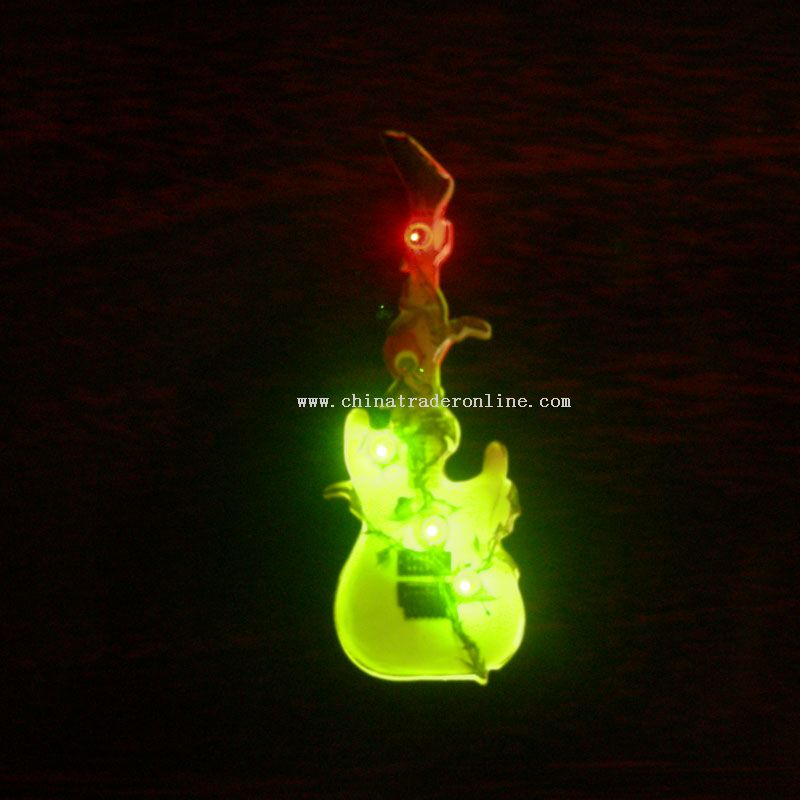
Send the pin artwork, the finish you are considering and the quantity, and we will quote the flashing pin range with the plating stack written out and a sample finished on the production tool, so the wear test ranks finishes on the pin you will actually receive.
Sourcing products from China?
Send your product list and target quantity for a quote and a digital proof.
Get a free quote


